
Accessible Cities: Makati
By Trisha Anne Tuviera
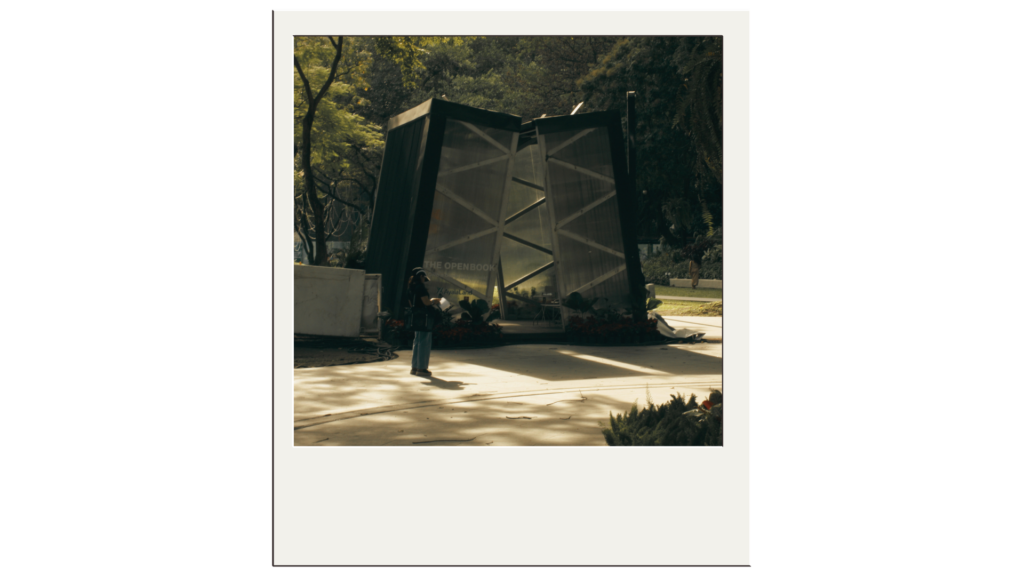
Imagine a city where you can travel by foot. You have the ability to go places without a car, but still have the option of comfortable public transport whenever you need it. Most places are within walking distance, and there are ample open areas where you can stay without having to purchase anything.
Makati offers an interesting case study for this imagery.
Although an infamous business district, the city is also famous for its parks, wide selection of restaurants and cafes, leisure spaces, pedestrian infrastructure and transportation connections. These different parts of the city exist close together, so that people can experience several activities without having to travel far.
This is one of the reasons why Makati has become an appealing destination for young people. But what makes a city truly feel easy to live in?
A Walkable City
One of Makati’s notable features is its commitment to pedestrian infrastructure. Its urban design makes everything accessible through a quick stroll.
Makati aspires to be a 15-minute walkable city. This means all destinations must be connected to each other to reach it in fifteen minutes either by walking, biking, or public transportation.
This central business hub is connected by pedestrian-friendly sidewalks, crossings, underpasses and foot bridges. Residents and visitors alike can easily navigate the city through its network of ambulatory walkways. This not only makes the city both safe and accessible, but it also allows people to take their time during walks.
Pedestrian connectivity is a significant feature integrated as part of Makati’s urban development. Aspects like sidewalks and underpasses can be easy to overlook but it’s these features that determine the people’s ability to move through the city itself and access its notable locations without relying on a vehicle.
Cyclist needs are also integrated in the city’s planning. It’s deemed to be one of the more bike-friendly cities because of its bike lane, sharrow lanes and bike racks. This innovation works toward encouraging more sustainable modes of transportation.
As for public transportation, Makati is directly served by MRT-3 making it an accessible place to go by commute. Bus and jeep terminals are just as reachable around Ayala Avenue, Glorietta and Makati Circuit.
For more private rides, Makati is in partnership with leading transportation companies like Grab. This makes ride hailing more convenient, as there are already designated booths near Ayala mall entrances.
These infrastructures and accessibility support Makati’s commitment to alleviate traffic congestion in the city. By improving its routes and environment, it gives people less reason to rely on personal vehicles and instead use public transportation.
For young people spending their time in Makati, this can mean roaming the city on foot to reach restaurants, markets, and parks without needing to arrange another ride every few minutes. It also eliminates the hassle of walking on uneven pavements that make it difficult to walk comfortably. Ultimately, both residents and visitors of the city get to enjoy its efficient system of infrastructure and transportation.
A Reason to Walk
Walkability, however, is not only about going from one place to another. A city also needs to spark the people’s desire to walk. Makati’s parks provide some of those reasons.
Jaime Velasquez Park, Legazpi Active Park, Ayala Triangle gardens are only some of the green and open spaces that allow the district to breathe. By breaking up the city’s modern high-rise environment through parks, it gives the people a place to exercise, sit and relax, or meet with friends and participate in community activities.
These spaces allow people to breathe. It challenges the idea that a city is only valuable if it focuses on business and commercial interests.
An important distinction to make when thinking about accessible public third spaces is that people don’t need to spend money to linger. If young people are constantly searching for somewhere to hang out, but most available spaces require them to purchase an item, then leisure solely becomes tied to one’s consumption. These accessible public spaces then offer the opportunity to be somewhere without having to spend too much.
This goes to show how a city can be just as valuable if it cares for its people enough to give them an accessible space for recreation.
One-Stop-Shop
Another appealing feature of Makati is its diverse environment. It shows how high-rise buildings coexist among residential areas. Some established businesses are near small neighborhood ventures. And parks are tucked in between commercial establishments. This means that a city can accommodate several activities within a relatively small area. You can work, eat, meet friends, shop, rest and even exercise all in one place.
“As someone who formerly lived in a more "walkable" area of Makati, it was super convenient [especially] whenever I felt bored at home and needed somewhere to go. Whether I went out to do something, or to just clear my mind, I felt that the space that I was given was sufficient enough, compared to other areas in Metro Manila. For example, whenever I need last minute groceries or toiletries, there'd be a grocery store or convenience store close enough to walk to.”
- Joaquin, Gen Z Makati Local
It's this variety that underscores a livable city’s importance. It can’t only serve one purpose. A place designed exclusively for businesses can become empty once office hours are over. A place designed only for spending, leaves no room for people who simply want to linger in the area. Makat’s strength lies partly in its ability to overlap the different experiences.
Accessible to what extent?
Of course, no city is perfect and Makati is no exception. Accessibility may also have its limitations, especially to certain people. Accessibility is not just about sidewalks or destinations being close together, but social and economic factors, too.
Who are the people who can afford to be in Makati? Can people with disabilities freely navigate the city comfortably? Are pedestrian routes convenient in all conditions?
These questions matter because a city can be accessible physically, while also being socially and economically difficult to access. Therefore, Makati’s infrastructure is not a finite solution, but a collection of ideas that show that it is possible to create a liveable city environment in the Philippines. Other cities can learn from Makati as an environment and improve on their own.
Makati is not the only Philippine city developing solutions for walkability in urban areas. Cities like BGC and Alabang are also working towards better urban development to ensure walkable and accessible destinations for its citizens.
Blueprint, Not Template
This is not to say that every Philippine city should end up looking like Makati. Instead, we could all learn from Makati’s accessibility beyond just transportation. It’s about whether people can move and participate in daily activities without sacrificing comfort.
This is what makes Makati interesting in the context of “Makati Maxxing.” Unseemingly, the phenomenon just might look like a social media trend with younger generations visiting trendy cafes, parks and restaurants, but underneath is really a desire to experience and maximize their time in the city’s accessible natural environment.
Perhaps we don’t aim to make more Makatis, but how we can make more livable cities where people have places to spend their time freely.
References

Musings in Makati
Tales found between the skyscrapers, side streets, and slow walks.
The Muse Team
Glenice Cosue
Jewel Reyes
Trisha Tuviera
Connect with us
Keep wandering. Keep noticing. Keep musing.